Mold Remediation Morristown NJ: Why Fixing the Leak May Not Finish the Job

Stopping a leak is an important repair, but it does not remove mold that has already grown. If a mark, musty odor, or concern about concealed damage remains, the next question is what happened to the materials that got wet. That does not mean every repaired leak needs extensive demolition. It means you need to consider the plumbing or roofing repair and the condition of the affected area separately before you paint, replace a cabinet, or call the job finished.
At MasterTech Environmental of North Jersey, we inspect mold and moisture concerns in Morristown homes. Tell us what leaked, how it was repaired, and what still concerns you. We can discuss an inspection without asking you to decide beforehand whether you need cleaning, removal, or something less extensive. That decision should follow the findings, not the stain size or how much you've already spent on the leak.
What the Repair Invoice Tells You and What it Does Not
Picture a supply line leaking inside a bathroom vanity. The plumber replaces the connection, checks the repair, and leaves you with an invoice. Water is no longer dripping, and the visible cabinet surface dries. A few days later, however, the base still smells musty, and you cannot see underneath it. The plumbing invoice explains the pipe repair; it does not necessarily document the condition beneath the cabinet or whether anyone evaluated that area.
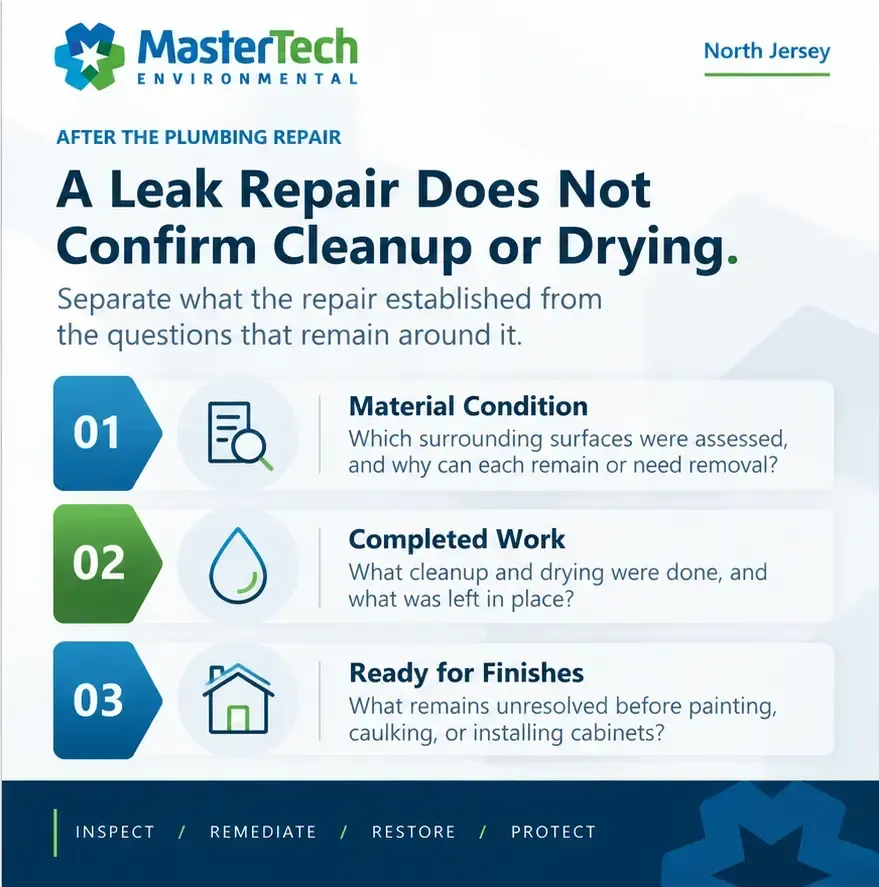
In that example, the useful follow-up is to identify what remains unknown. Was the cabinet base inspected? Did water reach the wall behind it? Was drying performed, and is there a record of the areas checked? Those questions help focus the next visit. They don't establish that the whole vanity must be removed, and they don't require you to pull it apart yourself.
Gather any existing records, including repair notes, photographs, and information from anyone who handled drying. If you do not know how long materials were wet or which areas were inspected, say so. Guessing creates a misleading history. A straightforward account of what you know gives us a better starting point than assuming the entire area was addressed just because one trade finished its work.
Why the Material Matters More Than the Size of the Mark
The same cleanup approach does not suit every affected surface. Mold on a cleanable hard surface and mold in an absorbent material can require different treatment. Some porous materials may be difficult to clean completely and may need removal. A recommendation should therefore identify the material and its condition, rather than describe everything in the room as one problem. Ask why a particular item can remain or why its removal is being proposed.
| What you know |
The question still to answer |
| The leaking connection has been repaired |
Which surrounding materials were affected and what work was done on them? |
| The visible surface now looks dry |
What was established about concealed areas and the completion of drying? |
| A mark remains after cleaning |
Is it residual discoloration, unresolved growth, or something requiring further investigation? |
| Someone proposes removing material |
Which finding supports removal, and how much of the material is included? |
| Someone proposes repainting |
Have necessary cleanup and drying been completed before the cosmetic work? |
A remaining mark also needs context. Mold can leave stains that cleaning can't fully erase, so discoloration alone doesn't prove the cleanup failed. Covering the mark is not proof of success either. We recommend understanding the condition and any outstanding work before choosing a finish that hides it from view.
Prepare for an Inspection Without Disturbing the Area
You can make the first conversation useful without identifying a mold species or buying a test kit. Start with the history and the concern you want answered. Keep children and other household members from investigating an opened or suspect area, and don't remove material just to take a clearer photo. If you need to open a concealed area, plan it with the person assessing it.
- Describe where the water started and where you saw it travel. Include the room below or beside the leak if it was also affected. Keep observations separate from what someone suspects happened.
- Tell us which repairs, drying, or cleaning were completed. Share the provider's notes when available, and mention any cleaner, paint, or coating already applied to the area.
- Point out what remains different. A persistent mark, recurring odor, or damaged cabinet base is more useful to describe specifically than saying the bathroom still does not feel right.
- Explain which areas remain inaccessible. A built-in cabinet, finished wall, or stored belongings may limit what has been seen. Do not assume that an unseen space was included in earlier work.
- Ask what any proposed testing is intended to answer. The result should help interpret a defined concern alongside the inspection, rather than replace an explanation of the recommended work.
- Identify your next planned step. If you've booked painting, flooring, or cabinet installation, tell us. Address the unresolved condition before cosmetic work makes access harder.
Finish the Affected Area Before Finishing its Appearance
When you are ready to restore the room, separate the cleanup decision from the decorating decision. Moldy surfaces need proper cleanup and drying before you paint or caulk. Ask the people involved what they completed, what they left in place, and whether any repairs or assessments remain. Keep that information with the leak records so future questions don't depend on remembering a conversation from a stressful week.
A repaired supply line doesn't explain what happened beneath the vanity in our example. Before repainting or replacing the cabinet, find out which surrounding materials were assessed, what cleanup and drying were completed, and whether anything remains unresolved. A lingering mark doesn't automatically justify demolition, but the next finish shouldn't hide an unexplained condition.