Do Mycotoxins Stay in a House After Mold Is Removed?
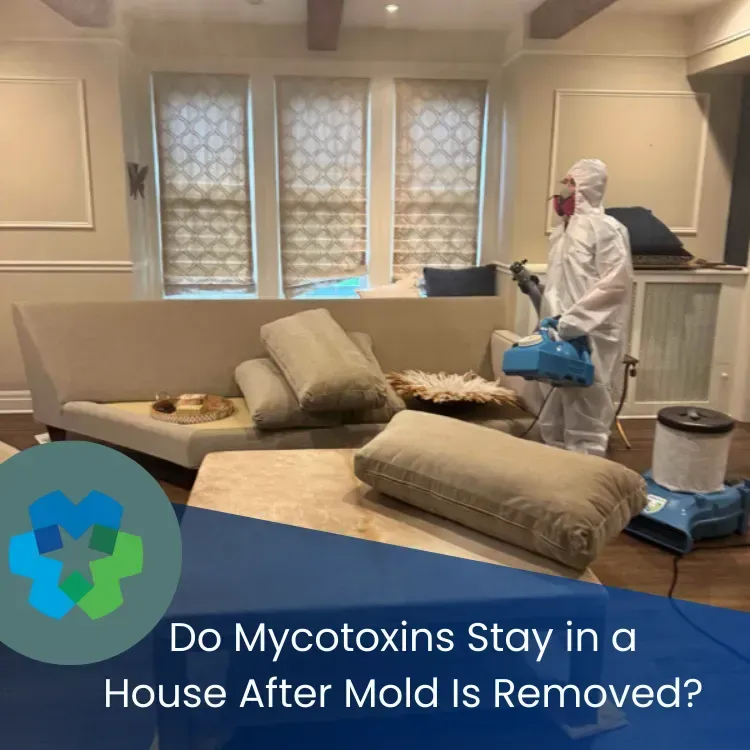
A homeowner can walk into a house after mold remediation and still feel that something is wrong. The visible growth is gone. The walls have been opened, contaminated materials removed, and antimicrobial products applied. Yet the environment still feels off. Sensitive occupants continue to react. This is one of the most common conversations we have with clients seeking mold remediation in Morristown, NJ .
The reason is often misunderstood. The problem is not always the living mold colony itself. The deeper issue is what that colony produced and where those byproducts traveled before remediation began. When mold grows inside walls, crawlspaces, or HVAC systems, it can release microscopic particles and toxins that settle into dust reservoirs throughout the structure. Removing the mold growth stops the source of new contamination, but it does not automatically remove everything that has already dispersed through the building.
Why Mold Remediation Does Not Always Resolve CIRS
Most remediation protocols focus on one primary objective: identifying mold growth and removing the contaminated building materials that support it. That approach follows industry guidance such as the ANSI/IICRC S520 Standard for Professional Mold Remediation, which emphasizes correcting moisture sources and removing colonized materials. However, water-damaged buildings rarely contain only intact mold colonies.
Research published in Applied and Environmental Microbiology (Peitzsch et al., 2012) found that microscopic fungal fragments can outnumber intact spores by orders of magnitude in indoor environments. These fragments are extremely small and can carry fungal metabolites, including toxins produced by molds associated with Mycotoxicosis, Mold Sensitivity, and Sick Building Syndrome (SBS).
Once those particles are released, the contamination pattern expands beyond the original mold growth. Air movement distributes fragments throughout the building, and dust serves as the storage medium. As a result, removing mold growth may stop the source of contamination, but it does not necessarily remove the environmental residue already present throughout the structure. This distinction is critical for homeowners seeking mold remediation Morristown NJ after ongoing health concerns or unresolved indoor air quality issues.
Evidence That Mycotoxins Persist in Indoor Environments
Environmental sampling studies repeatedly demonstrate that toxins associated with mold growth can remain inside buildings long after the original growth site is removed. A study published in Indoor Air (Bloom et al., 2009) examined dust samples from homes damaged during Hurricane Katrina and detected multiple mycotoxins in settled dust. These included compounds linked to molds commonly found in water-damaged structures. Importantly, the toxins were detected in dust reservoirs throughout the homes, not only where visible mold had grown.
Additional research published in Environmental Science & Technology has identified toxins such as Trichothecenes, Aflatoxin, Ochratoxin, Gliotoxin, and Chaetoglobosins in indoor environments affected by mold contamination. These compounds were detectable in dust and particulate samples even when mold colonies were not directly visible at the sampling location.
Taken together, these findings illustrate an important principle of building contamination: mold growth acts as a production site, but the toxins it produces can spread and accumulate throughout the structure. Understanding how that spread occurs is essential to understanding why some remediation projects fail.
How Contamination Spreads Through a Home
When mold grows inside building materials, contamination rarely stays confined to that location. Buildings constantly move air through pressure differences between rooms, attics, crawlspaces, and wall cavities. HVAC systems further accelerate this movement. As contaminated particles travel through airflow pathways, they eventually settle into household dust and porous materials. Scientific studies on fungal fragmentation show that some fragments are smaller than one micrometer, allowing them to remain airborne for extended periods before settling. Once settled, they integrate into ordinary dust.
Common reservoirs include:
- Carpets and rugs
- Upholstered furniture
- HVAC ductwork and returns
- Insulation and wall cavities
- Stored belongings and textiles
- Horizontal surfaces where dust accumulates
Once contamination reaches these reservoirs, normal household activity can resuspend particles into the air. This is why many homeowners eventually call us for mold remediation Morristown NJ after previous remediation attempts did not resolve the problem. The mold source may have been removed, but the distributed contamination remained.
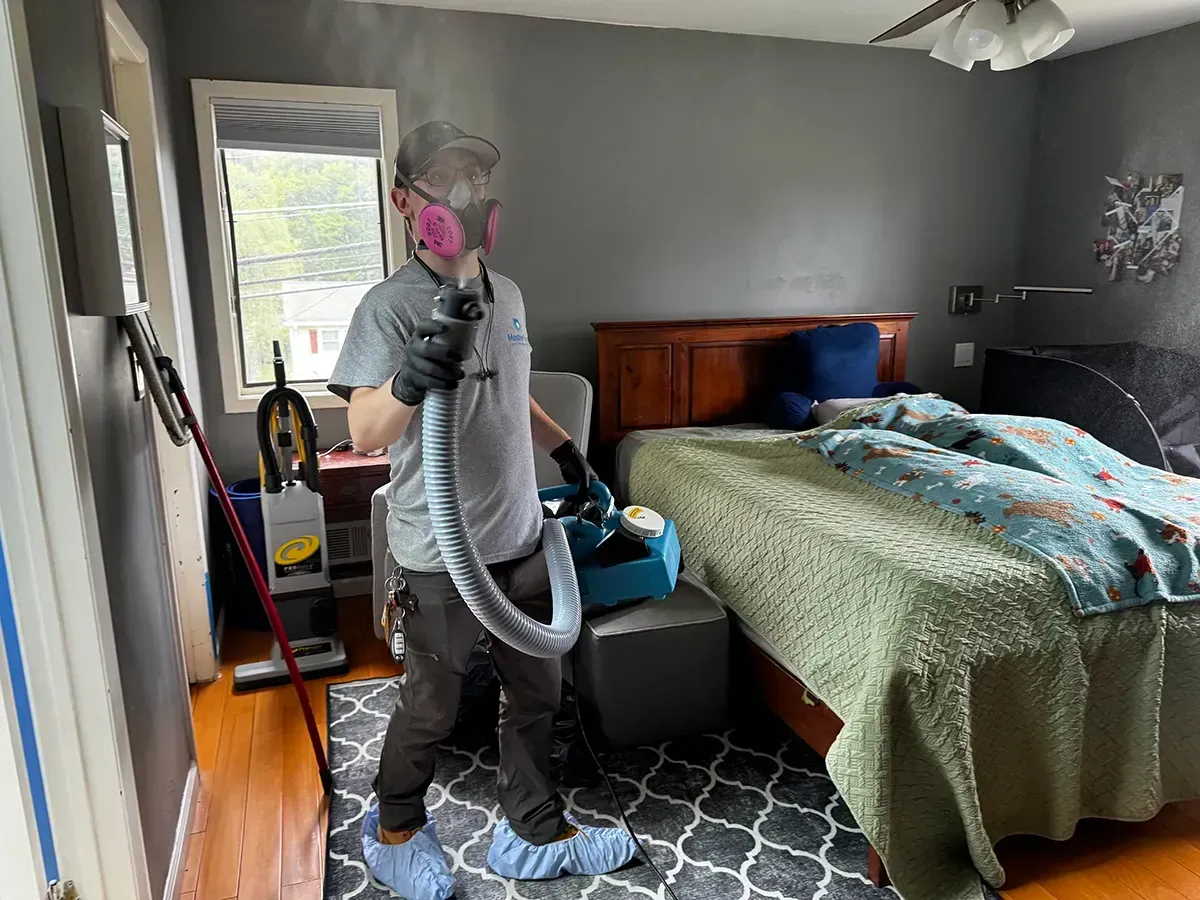
What Actually Removes Mycotoxin Contamination
Stopping mold growth is only the first step. Effective remediation must also address the contamination left behind by mold. At MasterTech Environmental, our remediation approach focuses on the entire contamination pathway.
- Source Removal: Materials that supported mold growth must be removed or structurally cleaned. Porous materials such as drywall, insulation, and carpeting are often unable to be fully decontaminated once colonized. Removing these materials stops further production of toxins.
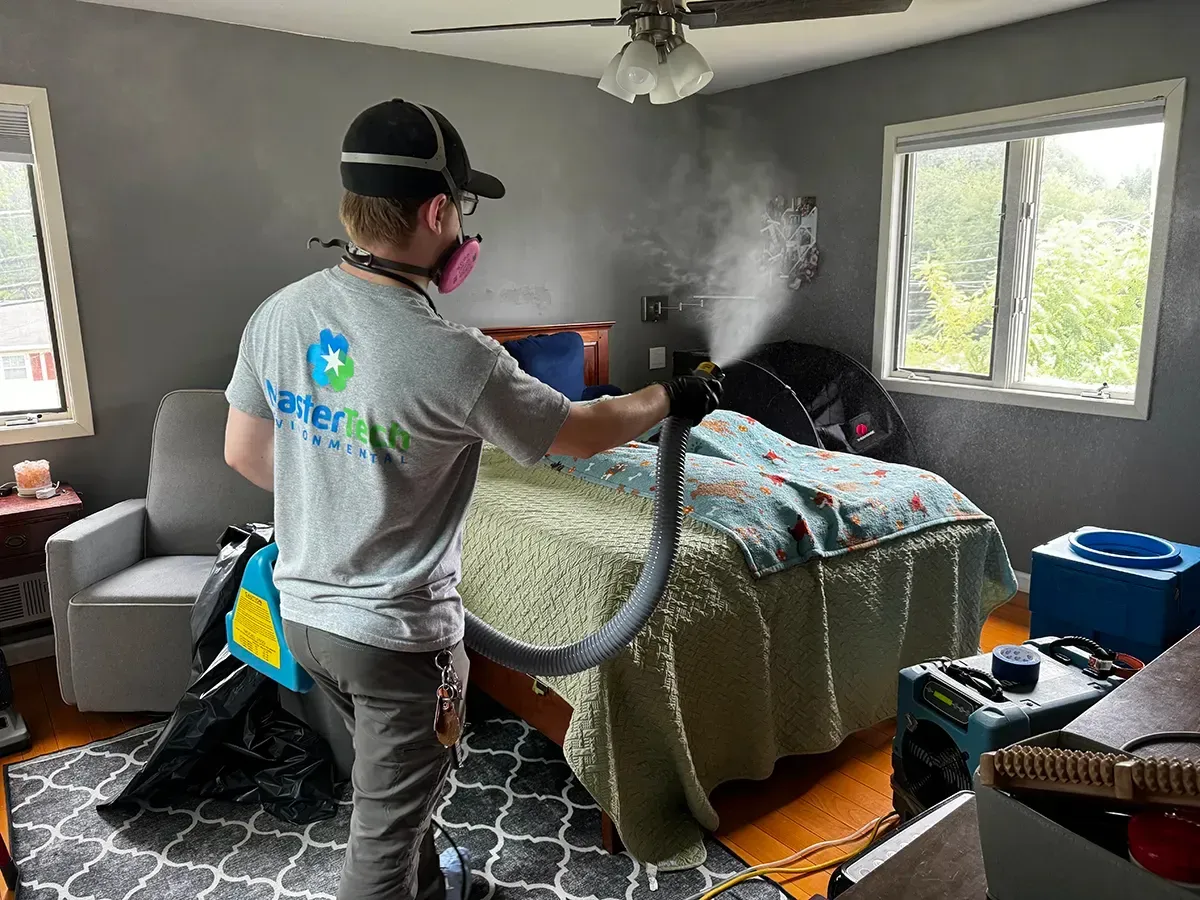
- Containment and Air Control: Proper containment prevents contaminated particles from spreading during remediation. Negative air machines with HEPA filtration maintain pressure differentials that capture airborne particles before they migrate to clean areas.
- HEPA-Based Surface Cleaning:
Once the source is removed, remaining contamination is primarily particulate. Surfaces must be cleaned in a way that captures particles rather than redistributing them. This typically includes:
- HEPA vacuuming of structural surfaces
- wet wiping of non-porous materials
- removal of heavy dust reservoirs
HEPA filtration captures particles down to 0.3 microns at 99.97% efficiency, preventing them from being released back into the environment during cleaning.
- HVAC and Dust Reservoir Remediation: Because contamination often spreads through airflow, HVAC systems must also be evaluated. Ductwork, returns, and air handlers can store contaminated dust and redistribute it throughout the home if left untreated.
- Verification and Environmental Review : Once cleaning is complete, we review the structure to confirm that the contamination pathway has been addressed. In some cases, we review external testing reports, such as ERMI or HERTSMI results, provided by clients or physicians, to help interpret how the building environment relates to occupant exposure concerns.
The objective is not simply to remove mold growth. The objective is to eliminate the reservoirs that allow contamination to persist.
Restoring the Building Environment
Water-damaged buildings often accumulate contamination for months or years before anyone realizes the problem exists. Mold colonies hidden behind drywall or under flooring can release spores, fragments, and toxins into the indoor environment long before visible damage appears. When remediation focuses only on visible mold growth, the deeper contamination pattern can remain.
Effective remediation requires addressing the entire contamination pathway, from the original moisture source to the dust reservoirs where particles settle. When that process is done correctly, the building environment can be restored, and the contamination cycle can be stopped. This is the approach our team takes when performing mold remediation Morristown NJ. Mold growth is only one part of the problem. Removing the contamination left behind is what ultimately restores the indoor environment.