
The "Phantom Rain" of Morris County
Why Attic Rain Causes Mold in the Dead of Winter
It's a clear February morning in Morristown. No storm. No wind. No rain in days. Yet there it is, a damp stain spreading across your second-floor ceiling. You check the forecast again just to be sure. Nothing. So you assume the worst and call a roofer. When they tell you the shingles and flashing look fine, the confusion sets in. If the roof is not leaking, why is your ceiling wet?
Mold Remediation Morris County, NJ Experts
In Morris County, this winter mystery has a specific cause. The problem is not failing shingles or storm damage. It is warm, moisture-laden air rising through small openings in your ceiling, freezing inside the attic, then melting and dripping back down when the temperature shifts. This hidden cycle, often called attic frost or phantom rain, is one of the most overlooked drivers of winter mold and recurring ceiling stains in older North Jersey homes. Understanding how it happens is the first step toward stopping it for good.
The Science of "Attic Rain"
To understand why this happens, we have to look at the physics of your home. In the winter, we seal our houses tight to keep the heat in. But a typical family of four in Morris County generates roughly 14 to 30 pounds (almost 4 gallons) of water vapor every single day simply by breathing, cooking, showering, and doing laundry.
In a perfect world, this moisture stays in the living space or vents outside. But thanks to a force called the Stack Effect, warm air rises. If your ceiling isn't perfectly airtight (and in older NJ homes, it rarely is), that warm, humid air is forced up into your cold attic.
Here is the mechanism of failure:
· The Freeze: When that 70°F humid air hits your roof sheathing—which might be 20°F on a cold night—it doesn't just condense; it freezes instantly. Over weeks of cold weather, a layer of frost builds up on the underside of your roof deck, looking like white snow.
· The Thaw: On a sunny winter day, the sun hits your black asphalt shingles, warming the roof deck. That frost melts all at once.
· The "Rain": The melting frost drips down ("Phantom Rain"), saturating your insulation and the drywall in your ceiling.
This wet environment, combined with organic dust and the paper backing on insulation, creates the perfect breeding ground for mold species such as Cladosporium and Penicillium—even in winter.
Why Morris County Homes Are Vulnerable
Winter attic mold is not just "a moisture problem." It's a layout problem. The way many Morris County homes were built, and later renovated, creates hidden air pathways that let warm indoor humidity rise into the attic all winter long. When that air hits the underside of a freezing roof deck, the frost cycle starts. The result is predictable: ceiling stains on sunny days, wet insulation, and mold that keeps returning even when the roof is intact.
Two housing types in our area are especially prone to this.
1. The Pre-War Colonials (Morristown & Madison): If you own one of the beautiful pre-1940s homes near the Morristown Green or in the historic districts, you likely have balloon framing. In these homes, the wall studs often run continuously from the basement to the attic without fire stops. This acts as a hollow chimney, funneling damp basement air directly into your attic, bypassing your living space entirely.
2. The Split-Levels (Parsippany & Denville): In the 1950s and 60s split-level homes common in Parsippany and Denville, the danger zones are the overhangs (cantilevers) and the multi-level ceilings. The "steps" in the roofline often have large, unsealed gaps where the lower ceiling meets the upper floor wall. These hidden bypasses act like open windows for moisture to rush into the attic.
The Hidden Accelerator: Your Humidifier
We often find that well-intentioned homeowners are accidentally fueling the fire. To combat dry winter skin, many families run portable or whole-home humidifiers. If you have a drafty attic and you pump gallons of moisture into your air to reach 50% humidity, you are essentially pumping water into your attic structure. In older homes with poor air sealing, we recommend keeping winter indoor humidity between 30-35% to prevent condensation on cold surfaces.
Why "Cleaning It" Won't Work
This is why generic mold sprays or "handyman specials" fail. You cannot solve a physics problem with bleach. If you scrub the mold off the wood but don't stop the moist air from rising, the frost will return the next time the temperature drops, and the mold will grow back in weeks.
Furthermore, mold that grows on wood sheathing can root deeply into the material's pores. Surface cleaning often leaves the root system intact, ready to bloom the moment moisture returns again.
The MasterTech Solution: Diagnosis and Correction
As a locally owned company living in these same communities, we don't just treat the symptom; we solve the problem.
Step 1: Scientific Diagnosis
We don't guess. Our Certified Mold Inspectors use thermal imaging cameras and moisture-mapping tools to pinpoint exactly where air leakage is occurring. We can often show you the specific "heat plume" on an infrared screen, where warm air is leaking around a recessed light or a bathroom fan venting into the attic instead of outside.
Step 2: The 12-Step Mold Remediation Morristown NJ Process
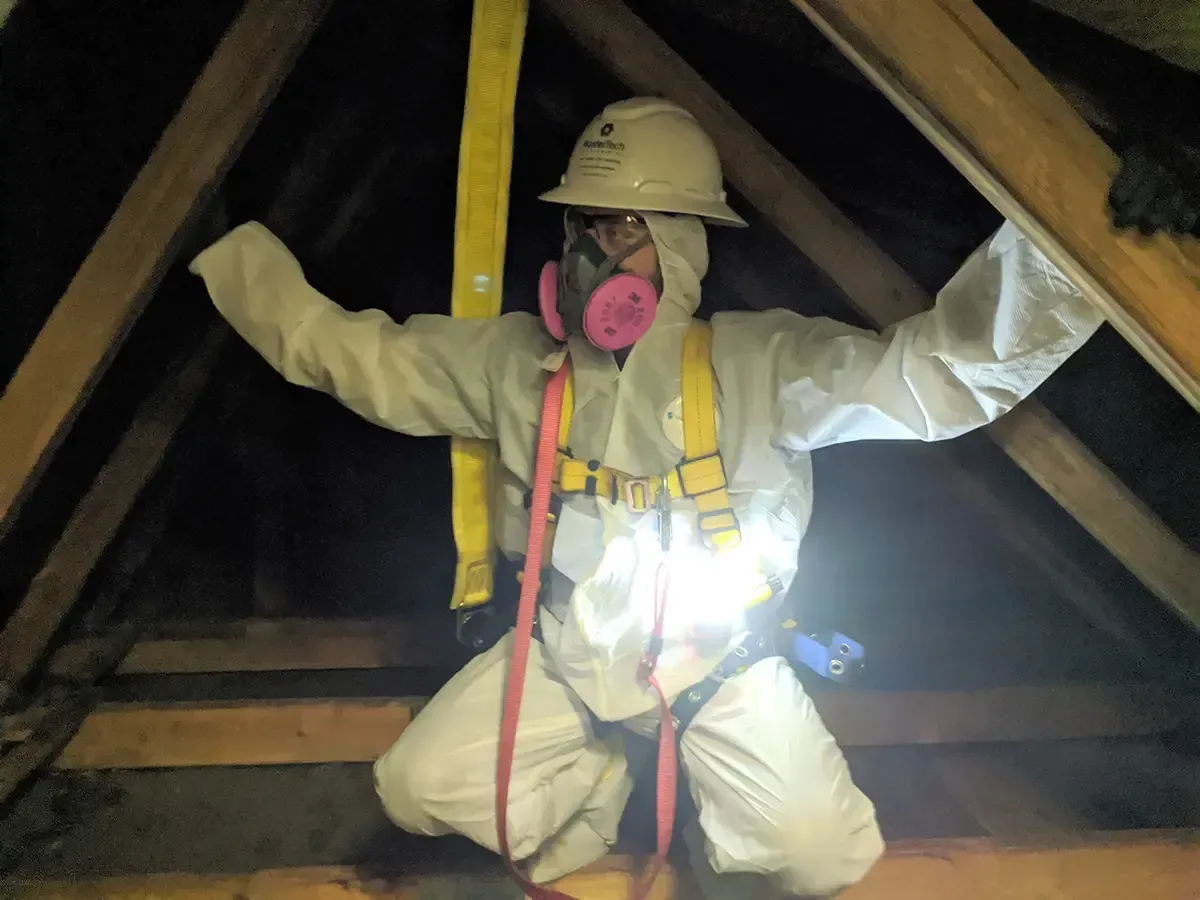
If mold is found, we implement our rigorous 12-step remediation process. This includes:
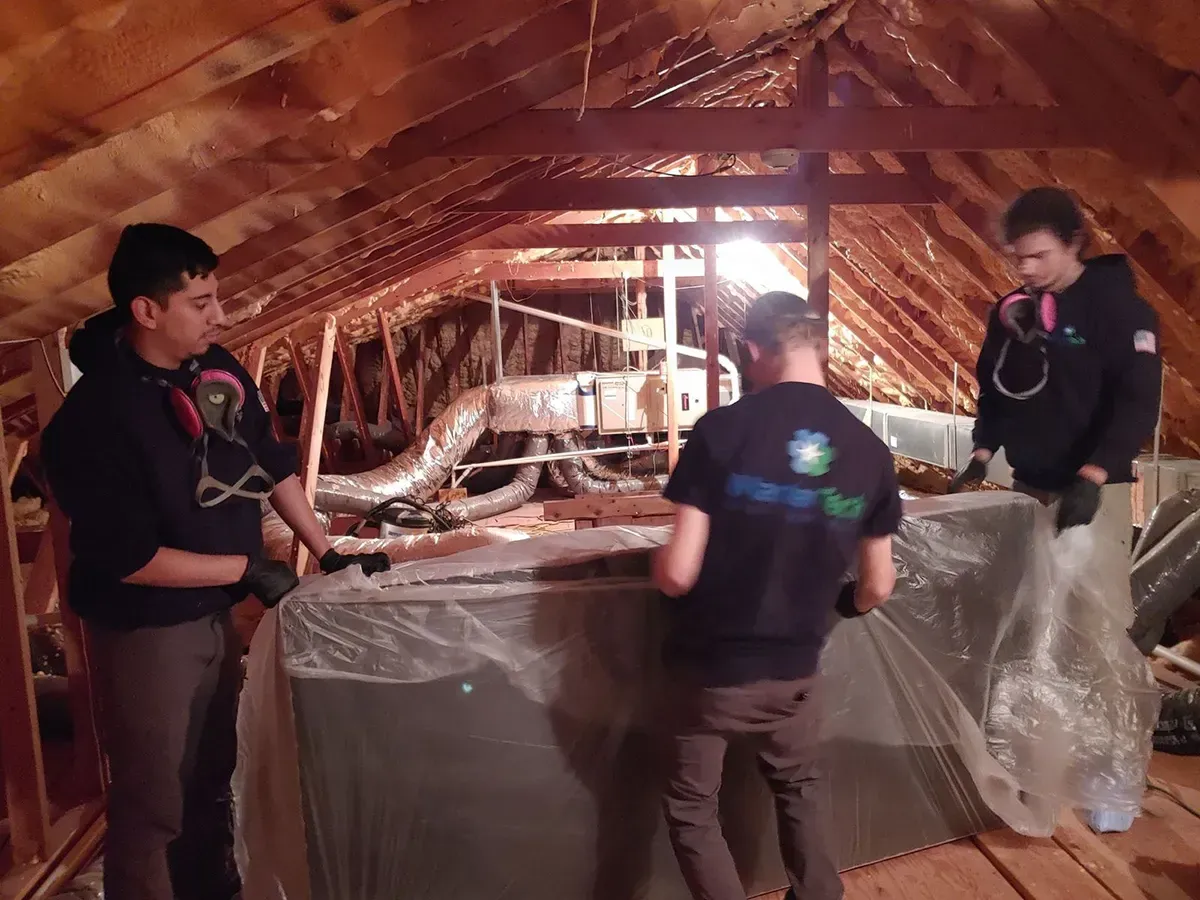
· Containment: Setting up negative-air chambers to prevent spores from spreading to your bedrooms during the work.
· Safe Removal: Bagging and removing saturated insulation and chemically treating the wood sheathing to remove deeply embedded mold roots.
· Oxidative Technology: Using advanced oxidizers to eliminate bio-contaminants at the microscopic level.
Step 3: The "Mold-Free" Guarantee
We are so confident in our process that we back our remediation with a 5-year, mold-free warranty. We can offer this because we help you identify the source—the air leaks and the ventilation imbalances—so the mold doesn't have a chance to return.
Take Control of Your Home Health
Winter mold isn't just an eyesore; it impacts the indoor air quality your family breathes. With 1 in 10 New Jersey residents suffering from asthma, allowing mold to fester above your bedrooms is a risk you don't need to take.
If you spot a mysterious stain on a sunny day, or dark spots or "white dust" on your attic ceiling, put down the bleach and pick up the phone.