
Why Mold Keeps Coming Back Along Your Bathtub Grout
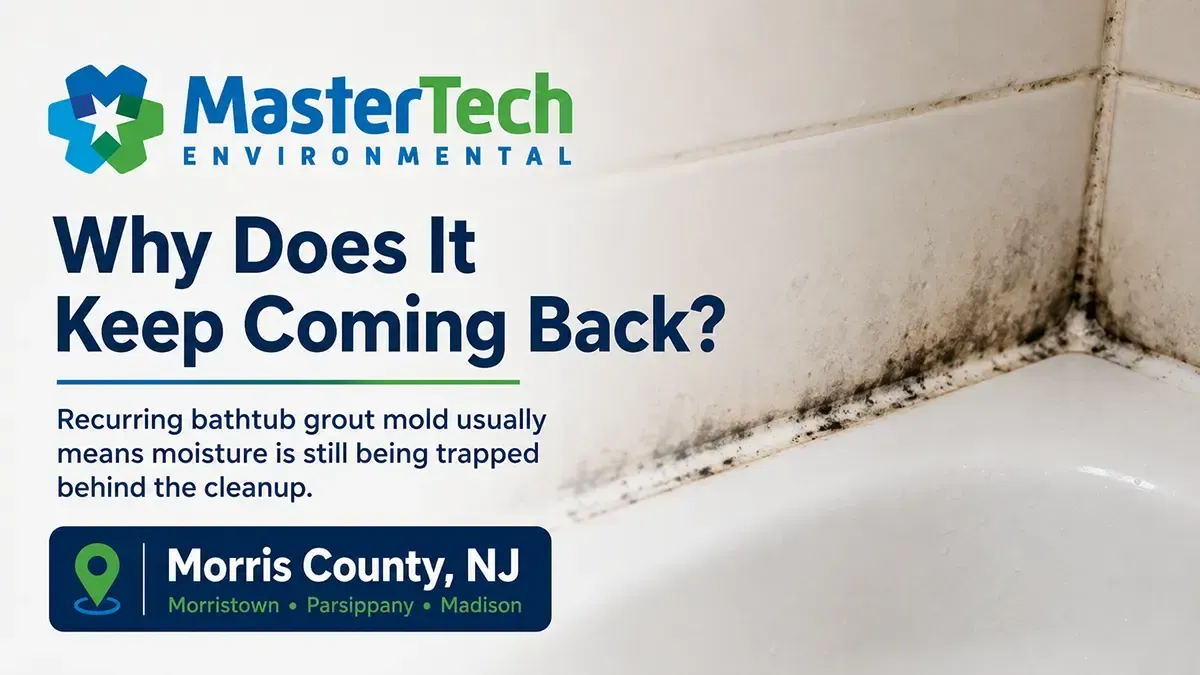
You clean the dark spots along the bathtub grout, the surface looks normal again, and then the discoloration returns. Sometimes it takes weeks. In other bathrooms, it comes back within days. Each cleaning appears to solve the problem without actually ending it. Recurring mold usually means the area remains damp long enough for new growth to develop. Cleaning removes what is visible, but it does not address poor ventilation, damaged caulk, leaks, or moisture behind the tile. The real question is whether this is routine surface growth or evidence of a larger problem that warrants a mold inspection.
When the problem gets bad, often the only real resolution requires mold remediation in Morris County, NJ Area. When you see signs of mold that come back, that means the problem is from behind your walls.
Why Mold Returns After You Clean It
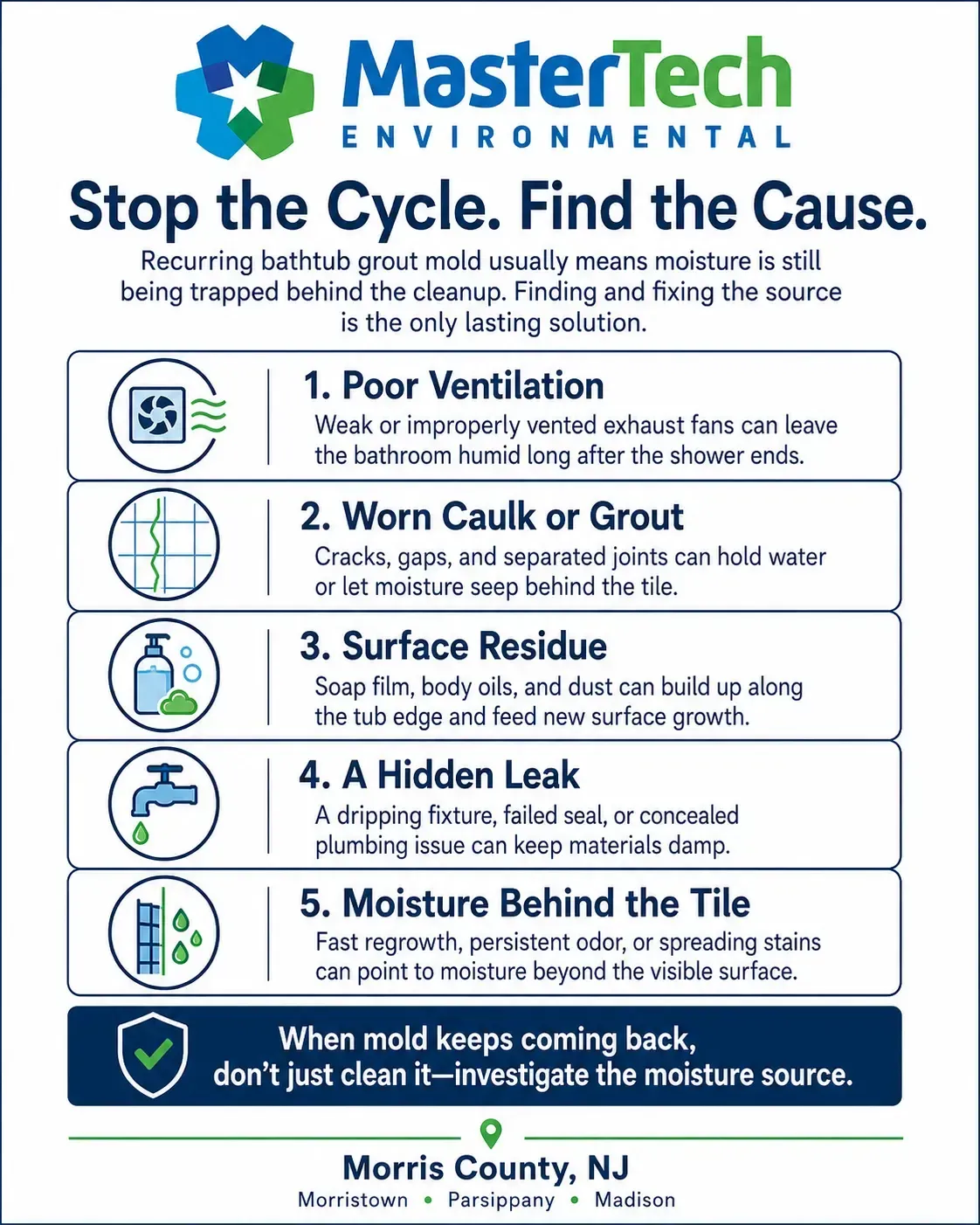
Warm water raises bathroom humidity; grout joints can remain damp even after the tile looks dry; and soap residue, skin cells, dust, and body oils collect on the surface. Mold may grow on that residue even though tile and grout are not themselves food.
A stronger cleaner may remove visible growth while leaving the conditions that produced it in place. The U.S. Environmental Protection Agency says moisture control is the key to mold control and notes that better ventilation and more frequent cleaning can reduce recurring bathroom mold. It recommends keeping indoor relative humidity below 60 percent and ideally between 30 and 50 percent when possible.
The return pattern matters. Gradual spotting may indicate slow drying and surface buildup. Fast regrowth, spreading stains, persistent odor, or damaged materials deserve closer attention.
Common Causes of Mold along Bathtub Grout in Morris County, NJ
Most recurring bathtub mold involves one or more of these conditions:
- Slow drying: A weak, dirty, unused, or improperly vented fan can leave the bathroom humid.
- Worn grout or caulk: Cracks, gaps, and separated joints can retain water or allow it to seep behind tile.
- Surface residue: Soap film and body oils collect in corners and along the tub edge.
- A leak : A dripping fixture, a loose connection, a failed seal, or a concealed plumbing leak can keep materials damp.
It's important to identify the moisture source rather than assume every dark mark has the same cause. Mold remediation in Morris County, NJ cannot begin until the source of moisture is found and fixed.
What You Can Check Before Scheduling an Inspection
Start with what you can observe without opening walls. Check whether the exhaust fan draws air effectively and vents to the outdoors. Look for split caulk, cracked grout, loose tile, peeling paint, swollen trim, and stains on the opposite side of the wall, and water collecting at the tub edge. Notice whether the room remains steamy or surfaces stay wet long after bathing.
Clean a small affected area appropriately, then dry it completely. Never mix bleach with ammonia or other cleaners. The CDC’s cleanup guidance recommends fresh air when using cleaning products and says the proper approach depends on the amount of mold and water damage. Photograph the area and record the date so you can judge the speed and extent of any return. If the area is small, the joints are sound, there is no musty odor, and better drying slows the return, maintenance may be enough. If it quickly returns despite moisture control, investigate rather than scrub again.
When to Turn to a Mold Inspection
A mold inspection becomes worthwhile when the visible spots no longer tell the full story. The purpose is not merely to confirm that a dark substance is mold. It is to determine where moisture is coming from, how far the affected area may extend, and what must be repaired to prevent the problem from continuing.
- The Growth Returns Unusually Quickly: Mold that reappears within several days of thorough cleaning and drying suggests that the surface is being exposed to persistent moisture. The source may still be ordinary shower humidity, but rapid regrowth raises the possibility of water entering through failed caulk, a plumbing defect, or damp material behind the tile. An inspection can compare surface conditions with moisture readings in nearby materials and determine whether the pattern is consistent with routine condensation or a concealed source.
- The Grout, Caulk, Tile, or Wall Is Deteriorating: Cracked grout alone does not prove there is mold inside the wall. However, loose tile, soft drywall, swollen baseboards, peeling finishes, or caulk that repeatedly separates can indicate that water has moved beyond the exposed surface. These materials may need to be evaluated before someone simply recaulks the joint, trapping moisture behind it. Inspection is particularly useful when the repair requires deciding what can remain and what must be removed.
- You Smell Mold but Cannot Find the Source: A persistent musty odor after the tub and grout have been cleaned should not be covered with fragrance or dismissed because the visible area is small. Odor can come from damp backing materials, the wall cavity, flooring beside the tub, or another nearby source. A moisture-focused inspection can follow the pattern into adjacent rooms, the ceiling below, or accessible plumbing areas without beginning with unnecessary demolition.
- The Problem Extends Beyond the Bathtub: Growth or water staining on the bathroom ceiling, wall, flooring, vanity, or in an adjoining room changes the scope of the problem. The EPA notes that homeowners can generally handle mold areas smaller than about 10 square feet, but extensive water damage, larger areas, or complex conditions call for additional professional guidance. Size is not the only factor, however. A small visible patch can still sit in front of a larger concealed wet area.
- There Has Been a Leak, Overflow, or Repeated Water Intrusion: Schedule an inspection when mold follows a tub overflow, supply-line leak, drain problem, or water entering another room or unit. Active leakage requires immediate source control. Once the leak is stopped, an inspection can help establish which materials became wet, whether they dried, and whether removal is necessary. Waiting for visible mold to spread can turn a limited repair into a more disruptive project.
- Cleaning and Repairs Have Not Solved It : If you have improved ventilation, repaired failed caulk, corrected obvious leaks, and cleaned the surface but the problem persists, more cleaning is unlikely to answer the remaining question. An inspector can look for missed plumbing issues, fan or duct problems, condensation, and moisture paths that are not obvious from inside the tub. This is the point at which repeated do-it-yourself treatment often costs time without resolving the underlying condition.
- Someone in the Home Is Especially Vulnerable: People with asthma, allergies, chronic lung disease, or weakened immune systems may need to take greater precautions around mold. The CDC advises people with weakened immune systems to avoid mold-contaminated buildings until remediation is complete when possible. An inspection cannot diagnose symptoms or replace medical advice, but it can provide better information about conditions in the home.
| Warning Sign |
What It May Indicate |
Recommended Next Step |
| Mold returns soon after cleaning |
The visible growth may be connected to moisture that remains in porous grout, damaged caulk, or materials behind the tile. |
Improve drying and ventilation. Arrange an inspection if the growth keeps returning. |
| A persistent musty or earthy odor |
Moisture or mold may be present in a concealed area even when little growth is visible. |
Have the source of the odor evaluated, especially if it remains after the bathroom is cleaned and dried. |
| Staining spreads to nearby walls, ceilings, or floors |
Water may be moving beyond the tub surround or affecting adjacent building materials. |
Schedule a mold inspection and investigate the likely moisture source. |
| Drywall feels soft or paint begins peeling |
The wall material may have absorbed water and started to deteriorate. |
Avoid covering the area with paint or caulk until the moisture problem has been identified. |
| Tile becomes loose or moves when pressed |
The backing material or adhesive may have been weakened by repeated moisture exposure. |
Arrange a professional evaluation before repairing or reinstalling the tile. |
| Water damage appears in the room below |
A tub, drain, overflow, supply line, or shower-valve leak may be allowing water to escape. |
Contact a plumber to locate the leak and consider a mold inspection for affected materials. |
| Mold appears outside the bathtub area |
The bathroom may have a broader humidity problem or a hidden leak affecting more than the grout. |
Measure humidity, check ventilation, and schedule an inspection if growth continues to spread. |
| There was a recent leak or overflow |
Materials behind the tile or under the flooring may not have dried completely. |
Have the affected area checked if it stayed wet, smells musty, or develops visible growth. |
| The affected area is getting larger |
A growing area is less likely to be resolved through routine cleaning alone. |
Stop repeated cosmetic cleaning and have the moisture source and extent of damage assessed. |
What a Useful Mold Inspection Should Include
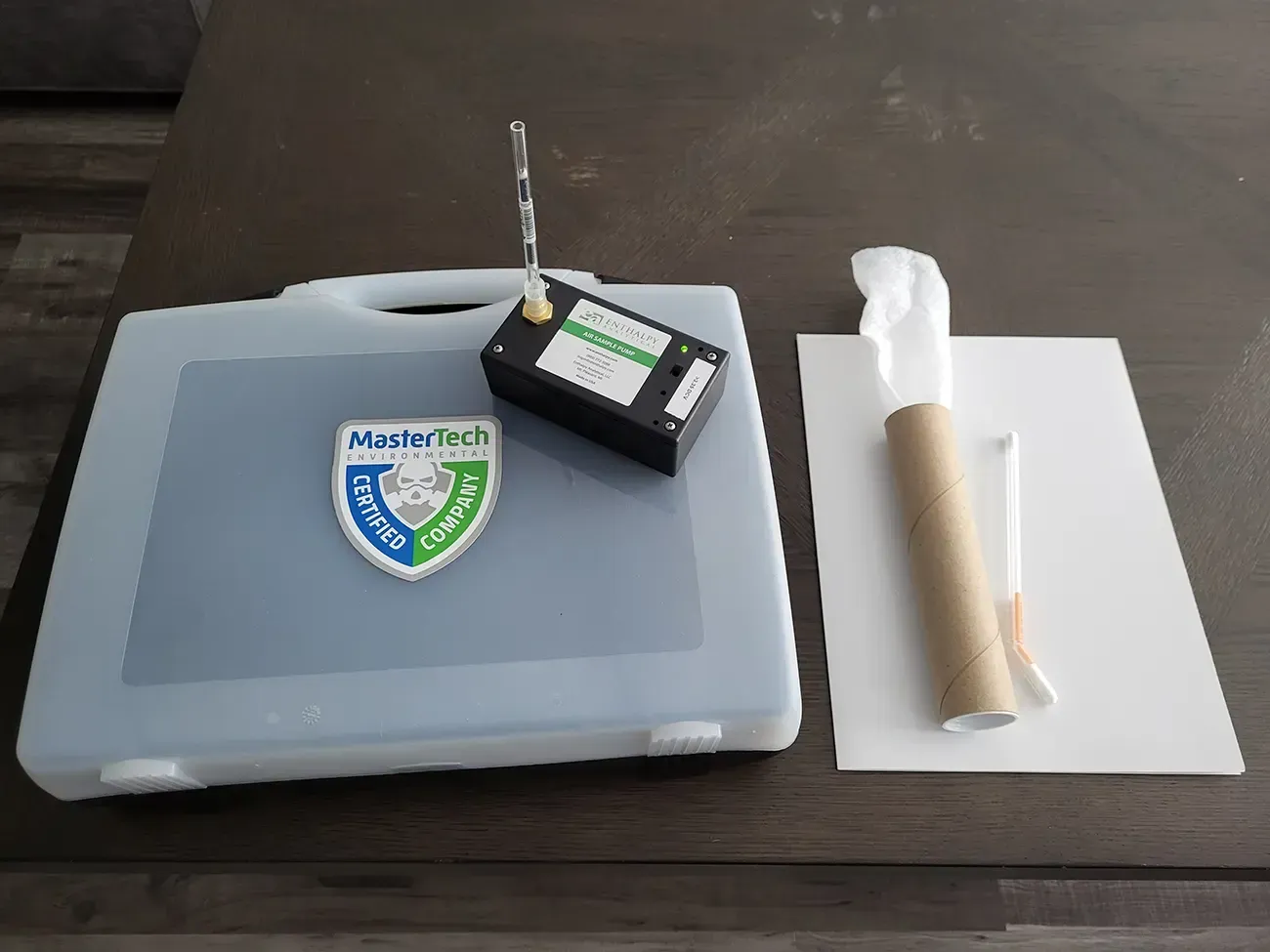
A useful inspection should focus on the building, not begin with a promise to identify a frightening mold species. Expect a visual review, examination of grout and caulk failures, moisture measurements where appropriate, and an effort to trace plumbing, condensation, or ventilation problems. The inspector may also check the adjoining wall, the room below, the flooring edge, the fan, and accessible plumbing.
Testing lets you know if you need to search for mold remediation Morris County, NJ or if there is another viable, safe solutions.
Testing is not automatically required. The CDC and NIOSH state that identifying and correcting dampness is more useful than routine air sampling, and that short-term measurements may not reflect exposure. Sampling can answer specific questions, but it should not replace moisture investigation. Ask what the inspection includes, whether testing is optional, and whether you will receive written findings and repair recommendations.
Mold Inspection in Morris County NJ
If grout mold keeps returning with rapid regrowth, persistent odor, damaged materials, or signs of leakage, a professional mold inspection in Morris County NJ can help determine whether it is limited to the surface or extends into surrounding materials. Mold inspection Morris County NJ homeowners trust will determine the extent of the contamination and its source. Our tests will determine the next steps and whether remediation is necessary.
Recurring grout mold does not always mean extensive hidden contamination. Often, the bathroom stays wet too long or a joint needs repair. Fast regrowth, persistent odor, material damage, spreading growth, or an unidentified moisture source are the signs that justify an inspection and a clear repair plan.