Why Finished Basements Are a Common Place to Find Hidden Mold
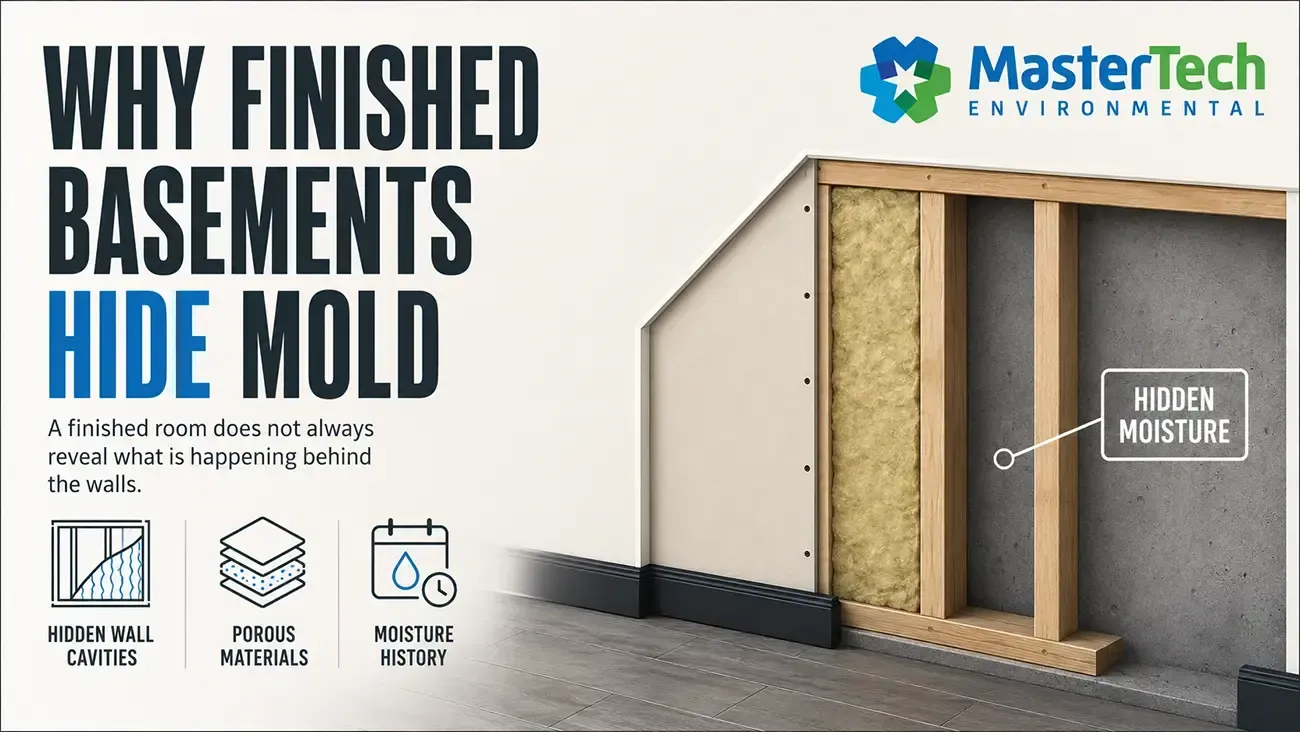
A finished basement often looks dry and comfortable long after the moisture problem began. Drywall, flooring, insulation, carpeting, and finished wall systems cover the surfaces where water once entered, or humidity stayed too high. The need for mold remediation Morristown NJ homeowners face often starts with water that reached a basement wall, slab, or enclosed cavity and did not fully dry. By the time an odor, stain, or air-quality concern appears, the original water event may feel long past. The concern is not that every finished basement has mold, but that finished materials make it harder to see where moisture has been.
| Finished basement condition | What we examine | Why it matters |
| Drywall installed near foundation walls | Wall cavities, lower wall areas, and evidence of past seepage | Drywall has paper facing that supports mold growth when it remains wet. |
| Carpet, padding, or insulation | Materials near slabs, foundation walls, and past water entry points | Porous materials hold moisture and can be difficult to clean once mold grows within them. |
| Finished storage and utility areas | Areas behind furniture, appliances, and built-in finishes | Finished surfaces can hide stains, leaks, and conditions that have limited airflow. |
| A history of dampness or flooding | Drainage, humidity, visible water paths, and prior repairs | Old water events help explain where concealed moisture may still be affecting materials. |
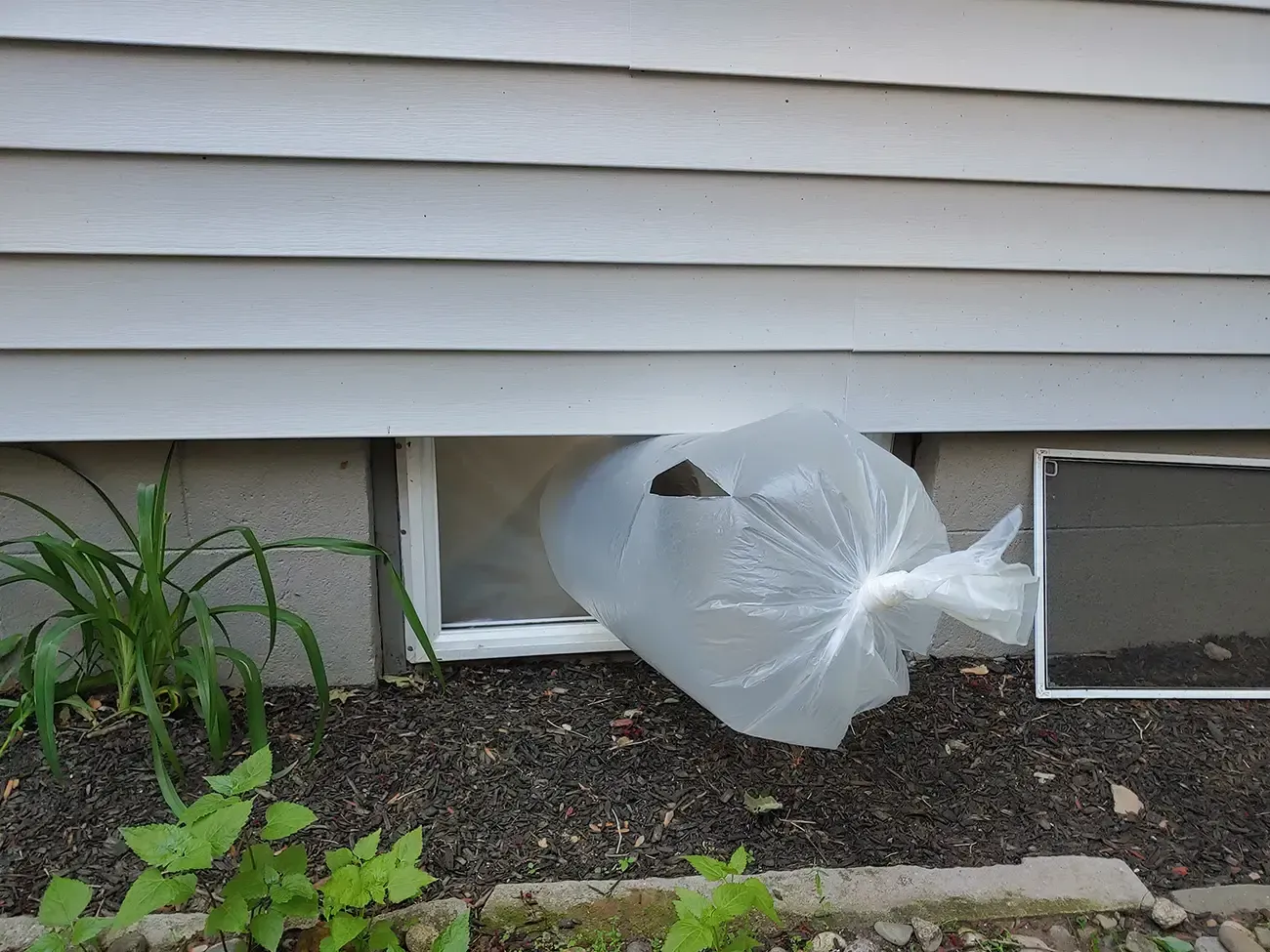
Finished Walls Hide the Materials That Need to Dry
A foundation wall and concrete slab are different from the walls and floors in the main living area. They sit closer to soil, drainage conditions, and ground moisture, and they often stay cooler than the finished rooms above. When a basement is left unfinished, signs of moisture are usually easier to see and investigate. Once drywall, insulation, carpeting, and finished flooring cover those surfaces, water has more places to remain out of sight.
Drywall is a major concern. Its paper facing gives mold a surface on which to grow when the material stays wet. The CDC lists drywall, wood, insulation, carpet, wallpaper, paper, fabric, and dust as common materials that support mold growth after exposure to moisture. A finished basement often places several of those materials near a foundation wall or slab simultaneously.
The problem is not limited to an active flood or a dramatic pipe break. Repeated humidity, slow seepage, a past plumbing leak, poor drainage, or water that entered during a heavy rain event can affect finished materials over time. EPA identifies basements as areas where excessive humidity requires attention and warns that porous materials become difficult or impossible to clean once mold grows in their spaces and crevices. A basement can look clean from the room side while the materials behind the finish tell a different story.
Moisture Often Stays Where You Cannot See It
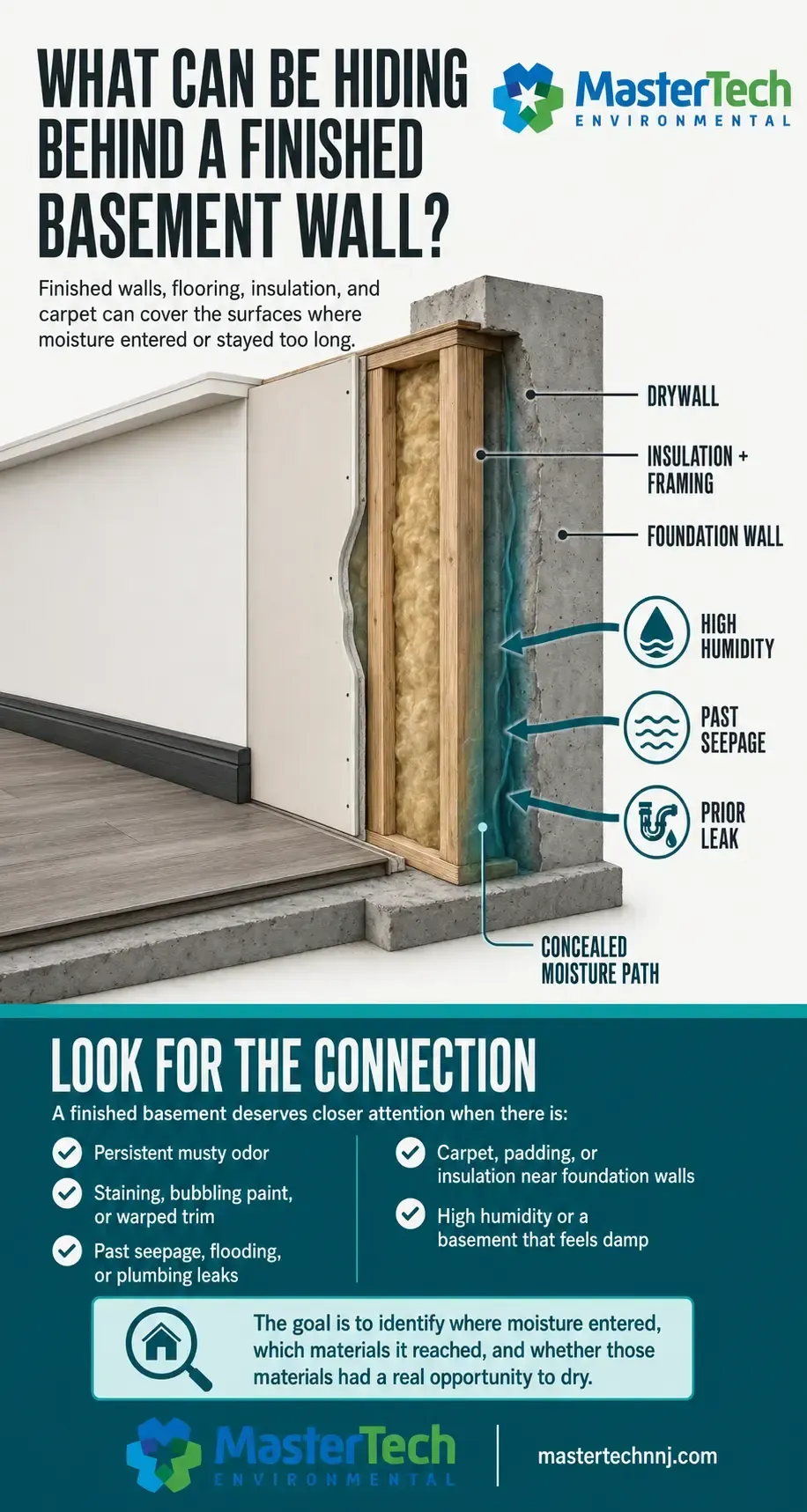
Finished basement walls create cavities between the room and the foundation. Those cavities may contain framing, insulation, wiring, dust, and the back side of drywall. If water reaches that area, the wall's finished face may not show the full path of moisture. A dry surface does not establish that the materials behind it dried completely.
At MasterTech, we view the basement as a system rather than focusing solely on the visible finish. We consider the foundation wall, slab, humidity level, drainage history, plumbing, and materials installed against or near those surfaces. We also look for evidence that a prior repair addressed a stain or damaged surface without resolving the underlying moisture condition. That history helps determine whether the concern is current, recurring, or tied to a past water event.
A finished basement deserves closer attention when there is:
- A persistent musty odor with no visible source
- Staining, bubbling paint, warped trim, or soft drywall
- Past seepage, flooding, or plumbing leaks
- Carpet, padding, or finished walls near foundation moisture
- High humidity or a basement that feels damp in warmer weather
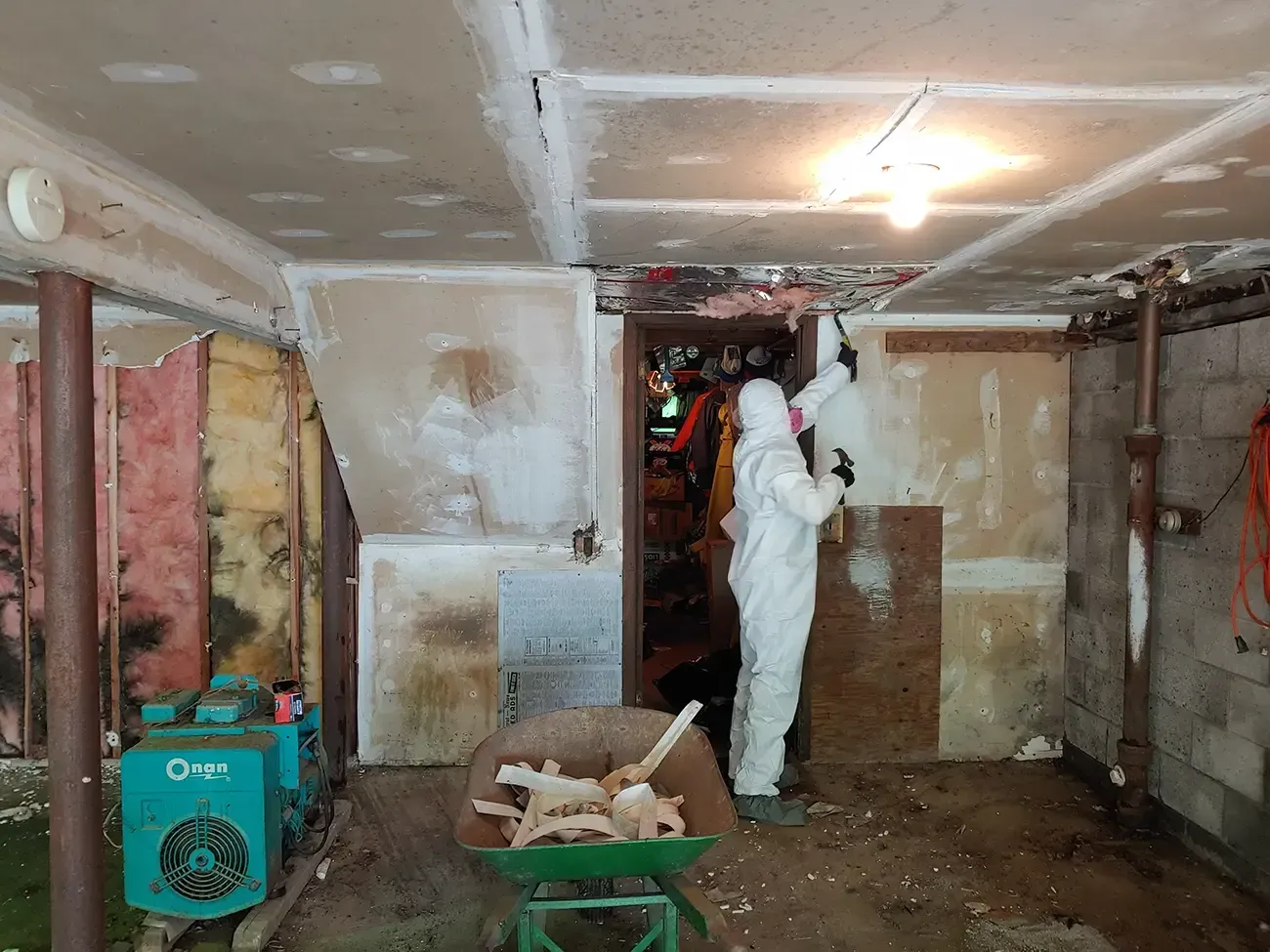
The Risk Comes From the Assembly, Not the Year It Was Finished
Many North Jersey homes have basements finished years after the original house was built. Those projects often turn a utility space into a family room, office, playroom, or storage area. The finished space adds comfort, but it also adds materials that can hold moisture and conceal a water path. We frequently investigate finished basements where a past moisture condition became hidden behind drywall, carpeting, insulation, or built-in finishes.
The decade of the renovation does not determine whether there is mold. Drainage, waterproofing, humidity, air sealing, material selection, maintenance, and leak history matter more. A basement finished in the 1980s may remain dry for decades if moisture is controlled. A recently finished basement may develop problems if water enters the wall assembly or humidity stays high.
CDC advises against carpet in basements and other moisture-prone areas because carpet and padding retain water and dry slowly. EPA also identifies basement humidity as a condition that requires control. Those principles support a practical inspection focus: determine where moisture entered, which materials it reached, and whether those materials had a real opportunity to dry. The answer guides the next step far better than the age of the basement finish alone.
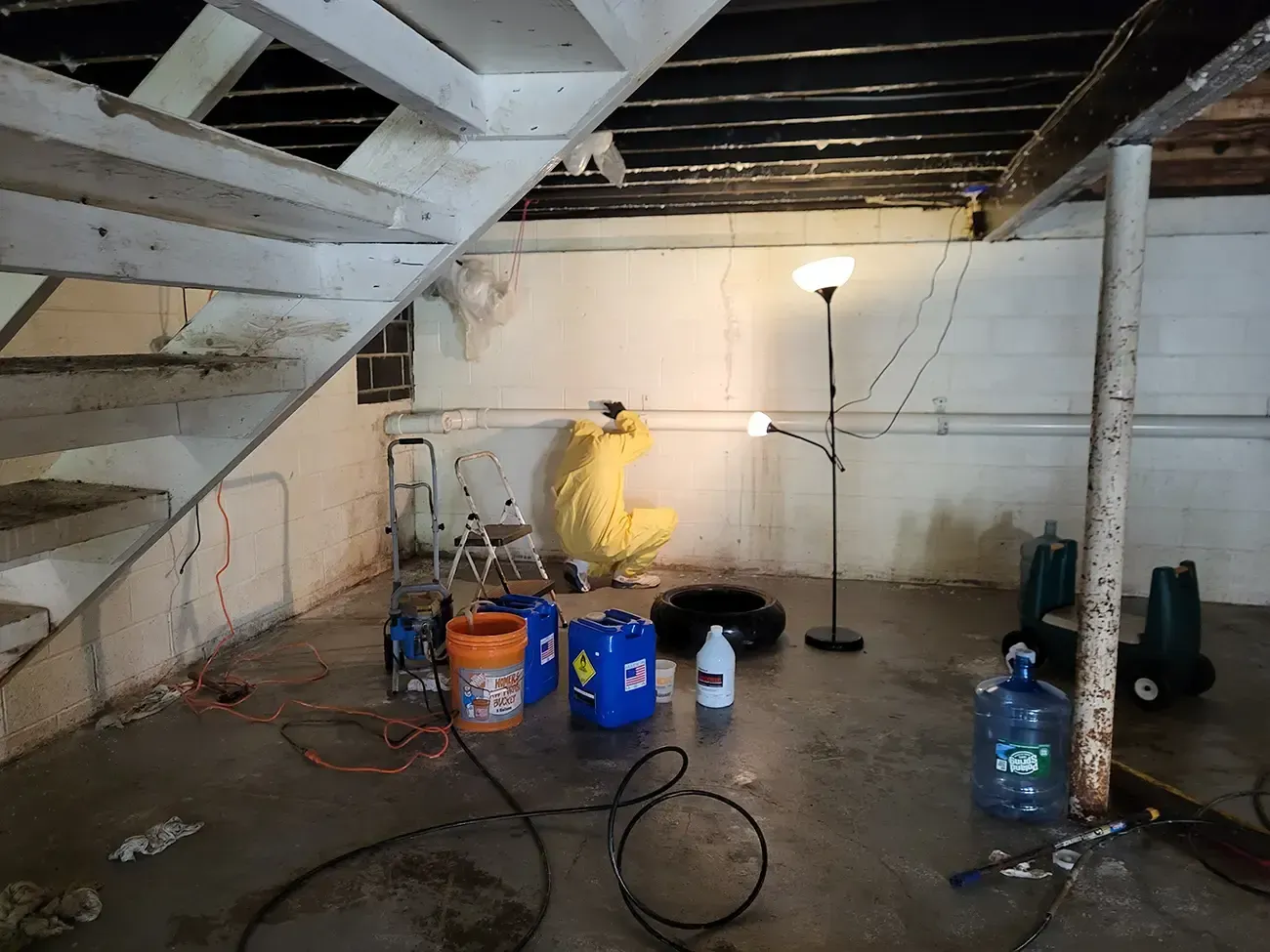
Mold Remediation Starts with the Moisture Source
Before mold remediation Morristown NJ homeowners arrange begins, the moisture source needs to be understood and corrected. Removing damaged drywall without addressing seepage, drainage, a plumbing leak, or persistent humidity leaves the same conditions in place. The visible material may be gone, but the cause remains. A proper evaluation connects the material damage to the moisture path that created it.
Not every finished-basement concern requires the same scope of work. Sometimes the issue is limited to a small, accessible area that dried quickly. Other times, water entered behind walls, beneath flooring, or into insulation and porous materials where it could not dry naturally. The inspection determines the difference by looking at the construction, water history, and condition of the affected materials.
The point is not to assume the worst when a basement has been finished. It is to avoid treating a finished surface as proof that the structure behind it is dry. Foundation moisture, past water events, and elevated humidity warrant attention before they lead to concealed damage. Mold remediation in Morristown NJ becomes more likely when those conditions remain hidden behind materials that feed mold and slow drying.