Stack Effect and Mold in Morristown NJ Homes: Why Mold May Be Spreading Beyond the Visible Area
You notice mold in the attic, a musty smell near the basement stairs, or dark staining along a wall that never seems to dry completely. The first instinct is to focus on the place where the mold appears. That makes sense because visible mold feels like the problem.
The harder truth is that mold often shows up where moisture settles, not always where the moisture started. In some Morristown homes, air movement helps carry damp air from one part of the house to another before growth becomes visible. For homeowners searching for mold remediation Morristown NJ , the key lesson is simple: do not judge the full mold problem by the visible area alone.
What Does Stack Effect Mean Inside a Home?
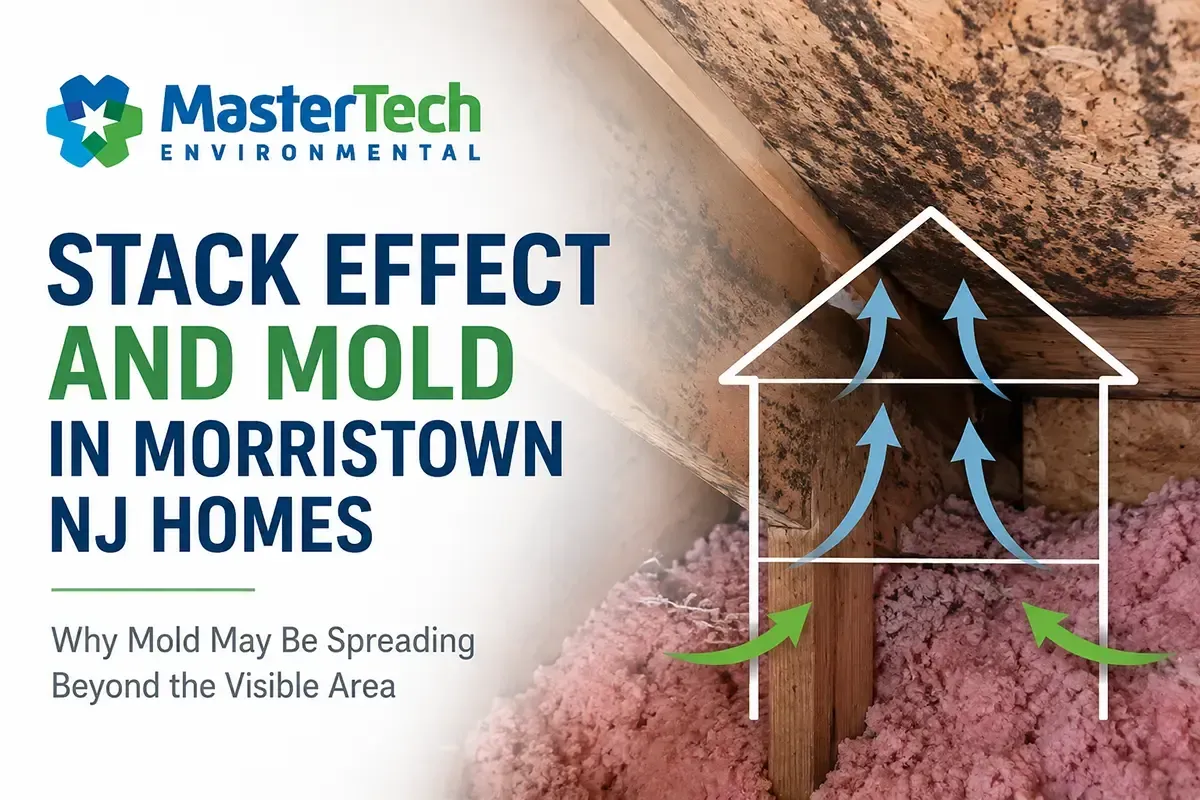
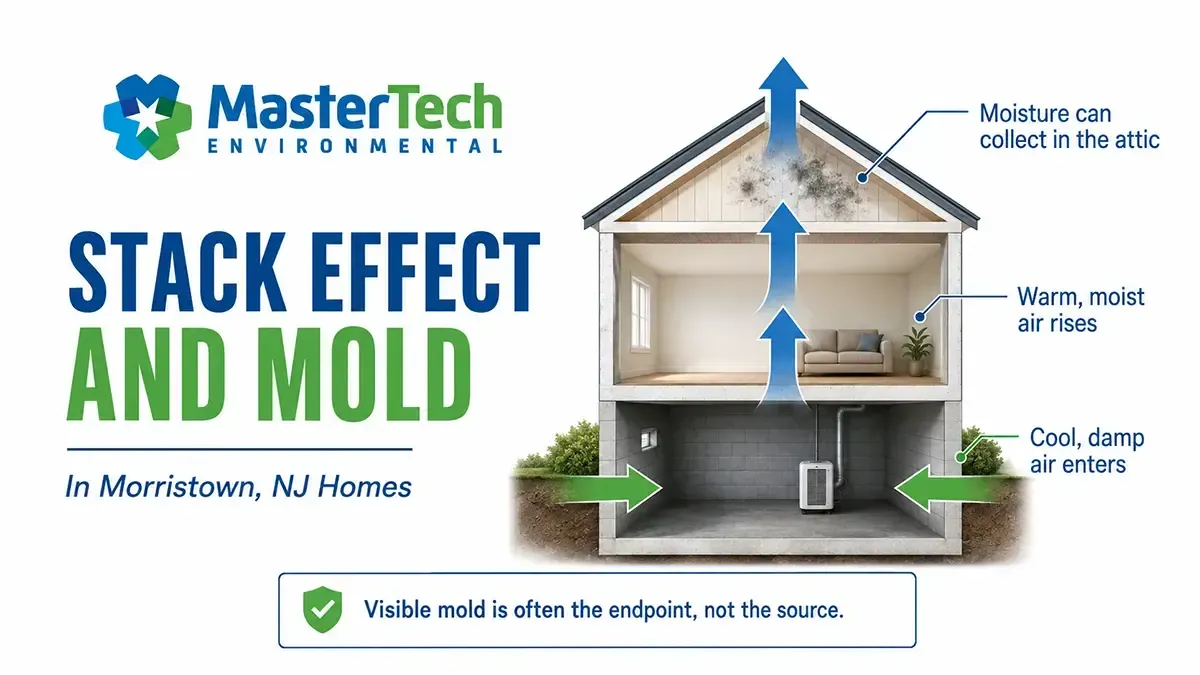
Stack effect is pressure-driven air movement through a house. During cold weather, warm indoor air rises because it is lighter than cold outdoor air. As warm air escapes through attic hatches, ceiling gaps, recessed lights, plumbing chases, and other upper openings, the house pulls replacement air in through lower openings.
That replacement air often enters through basements, crawl spaces, rim joists, foundation gaps, garage connections, and other low areas. The issue is not only that air moves. The issue is what the air brings with it, especially moisture from damp lower levels, past leaks, wet soil conditions, humid crawl spaces, or building materials that never dried correctly.
Building Science Corporation explains that stack effect, wind, and mechanical equipment all drive air through floors, walls, and ceilings. It also notes that uncontrolled airflow can carry moisture into framing cavities, contributing to condensation, mold, and rot.
Why Does Stack Effect Matter When You Have Mold?
Stack effect does not create mold by itself. Moisture creates the condition that allows mold to grow. Stack effect matters because it helps explain how moisture travels through parts of the home most homeowners never see.
Think about a bathroom after a hot shower. You see moisture on the mirror, walls, or ceiling because warm, wet air touched a cooler surface. The same moisture behavior happens in less obvious areas of the home when damp air moves into a cold attic, behind drywall, into insulation, or across wood framing.
The EPA states that mold spores are found indoors and in house dust, but mold spores do not grow without moisture. The EPA also warns that if mold is cleaned but the underlying water problem persists, the mold will likely return.
That is why the visible mold should not be treated as the full answer. The next question is where the moisture came from, how long the material stayed damp, and whether air movement helped move that moisture through the home.
Why Can Mold Show Up Away From the Moisture Source?
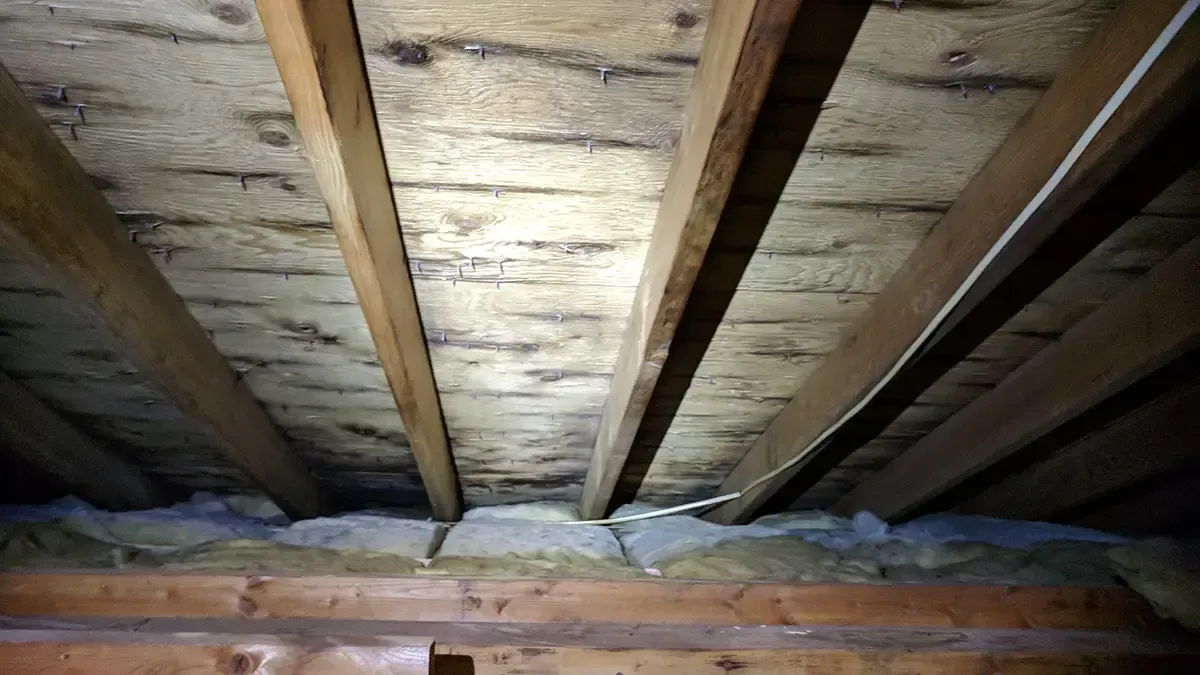
A Morristown homeowner might see mold on attic sheathing and assume the roof leaked. A roof leak is possible, and any roof leak deserves attention. However, attic mold does not always begin with rain coming through the roof. Warm, moist indoor air rising from below also deserves inspection.
A similar problem happens with basements and crawl spaces. A basement might smell musty after rain, but the odor does not always stay downstairs. Air pressure inside the house often pulls damp air upward into living areas, so the homeowner smells the issue away from where the dampness started.
This is the main lesson for the homeowner: visible mold is often the endpoint, not the source. The dark growth, odor, or staining shows where the condition became visible. It does not automatically show where the moisture path began.
| What the homeowner notices |
What it might mean |
Smart next step |
| Attic mold with no clear roof leak |
Moist indoor air might be reaching cold attic materials through ceiling gaps, attic access points, or other bypasses. |
Inspect the attic and the rooms below it, not only the roof. |
| Musty basement odor upstairs |
Air movement might be carrying damp lower-level air into living areas. |
Check the basement or crawl space for moisture, humidity, staining, and hidden mold conditions. |
| Mold returning after cleaning |
The visible growth was removed, but the moisture condition stayed active. |
Find and correct the moisture source before treating the mold as solved. |
| Staining near ceiling lines or cold corners |
Damp air might be condensing where warm air meets cooler surfaces. |
Use moisture mapping and inspection to confirm whether the material is still damp. |
What Signs Suggest Air Movement Should Be Part of the Mold Inspection?
Stack effect is not something a homeowner can confirm by looking at a single stain or smelling a single room. These signs do not prove stack effect caused the mold concern. They do mean the home deserves a closer moisture and mold inspection.
Look for patterns like these:
- Attic mold appears without an obvious roof leak. This matters because attic sheathing often shows moisture problems from inside the home, not only from exterior water entry.
- Basement or crawl space odors seem to move upstairs. This matters because pressure differences inside the home often move air from lower levels into living space.
- Mold returns after surface cleaning. This matters because repeated growth usually means the original moisture condition was never corrected.
- Condensation appears on windows, ceiling lines, exterior walls, or cold corners. This matters because condensation shows moisture touching cooler surfaces.
- Mold appears near attic access points, recessed lights, plumbing chases, or ceiling penetrations. This matters because these areas often serve as air pathways between the living space and the attic.
- A room smells musty, but the visible mold is elsewhere. This matters because odor does not always remain near the material that produces it.
These signs point back to the same concern: the home needs more than a surface-level look at the visible mold. The inspection needs to follow the moisture pattern.
What Does MasterTech Look For During a Mold Inspection?
This is where inspection matters more than guessing. A proper mold inspection does not stop at the visible growth. The inspector needs to identify the mold concern, check for damp conditions, and determine whether the moisture pattern points to a larger issue inside the home. Here at MasterTech, our inspection process is designed to uncover potential mold growth and the moisture source that is causing it. The process includes visual assessment, moisture mapping, thermal imaging, mold testing, indoor air quality testing, detailed documentation, and reporting.
That process matters in a stack-effect-related concern because moisture does not always follow the path a homeowner expects. Moisture mapping helps identify where dampness starts and stops. Thermal imaging helps identify surface patterns that indicate hidden moisture. Air and surface testing help confirm whether indoor mold spore levels or visible growth require a remediation plan. We also serve Morristown homeowners dealing with mold in attics, basements, crawl spaces, and interior spaces. That local experience matters because these are the same areas where stack-effect-related moisture concerns often show up.
When Is Mold Remediation the Right Next Step?
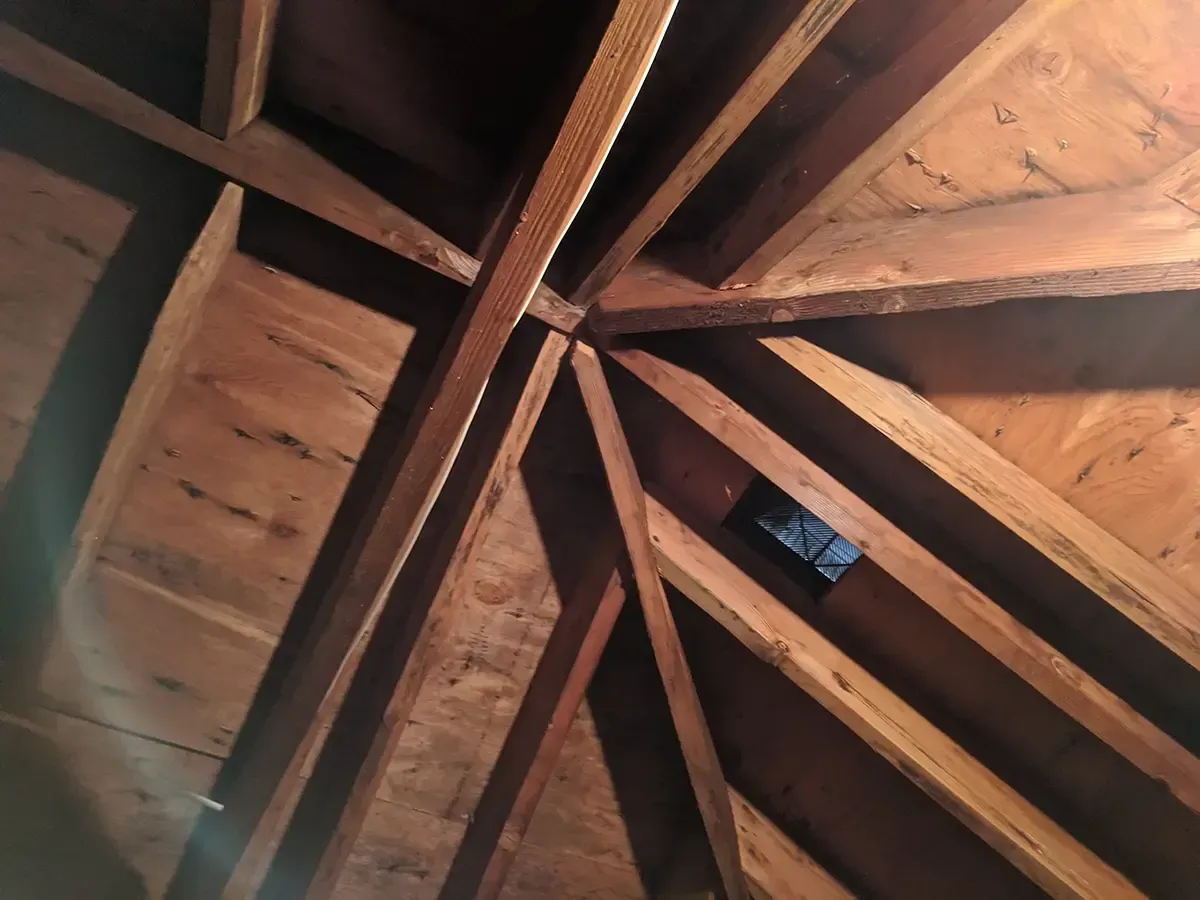
Mold remediation is the next step when inspection confirms mold growth requiring controlled removal. At that point, the job is not cosmetic cleaning. The work needs to remove contaminated materials or clean affected surfaces without spreading mold into areas that were not part of the original problem. That distinction matters inside a lived-in home. Pulling apart moldy material without containment spreads dust and spores into cleaner rooms. Scrubbing visible mold without solving the moisture issue leaves the home vulnerable to the same problem returning.
At MasterTech, our mold removal process includes source identification, containment, air filtration, cleaning, disposal, antimicrobial treatment, and, when appropriate, mold-resistant encapsulation of cleaned wood and structural components. Our mold remediation services are backed by certified technicians, a certificate of professional remediation, and a 5-year mold-free warranty.
Why Should Mold Remediation in Morristown NJ Start with the Moisture Path?
If you see mold in one part of your home, the visible growth deserves attention. However, the better question is not only, “How do I remove this?” The better question is, “Why did this area stay wet long enough for mold to grow?” Stack effect helps answer that question in some homes. It explains how damp air from one area moves into another, where cooler surfaces, hidden cavities, and porous materials create the right conditions for mold growth. That is why a serious mold concern should start with inspection, not surface cleaning.
If you have attic mold, basement odor, crawl space moisture, recurring mold, or staining that does not make sense, schedule a MasterTech mold inspection in Morristown NJ. The goal is to identify the growth, trace the moisture conditions that support it, and determine whether professional remediation is needed before the problem spreads or recurs.