Mold Remediation Morris County NJ: Why Fan-Only AC Keeps North Jersey Properties Feeling Damp

A North Jersey property can feel active without feeling dry. The thermostat reaches the set temperature, the vents keep moving air, and the system sounds like it is still working, but the air inside still feels damp. In Morris County homes, apartments, and commercial spaces, that confusion often starts with one setting: the AC fan is set to “On.” The property sounds like the HVAC system is helping, but the cooling cycle may already have stopped removing moisture.
At MasterTech Environmental, we view fan-only AC mode as a moisture-control issue, not a minor comfort setting. When the fan stays on after active cooling stops, the blower continues to move air through the system without the same drying effect. For mold remediation in Morris County NJ , property owners researching a damp AC-related problem, the first question is not whether the fan created mold by itself. The better question is whether the fan kept damp air active after the AC stopped drying the property.
A Cool Property Is Not Always a Dry Property
A thermostat measures temperature near the thermostat. It does not confirm that indoor humidity has dropped enough to make the property feel dry. That distinction matters during the North Jersey cooling season because a building can reach its temperature setting before the system has removed enough moisture. In Morris County, the main living area, office suite, hallway, or finished lower level may all feel different even when one thermostat controls the system.
The U.S. Department of Energy makes the same core point in its guidance for hot, humid conditions. Air conditioning must reduce both indoor temperature and humidity to create comfort. When the system cools the air without removing enough moisture, the property can still feel damp. That explains why a property owner might say the AC is running, the space is cool, and the air still feels heavy.
That gap between temperature and dryness is where fan-only mode becomes relevant. The fan keeps the air moving, making the property feel active. The problem is that airflow is not the same as moisture removal. Once active cooling stops, the fan may keep circulating air, leaving the drying process incomplete.
Why the Fan Setting Matters
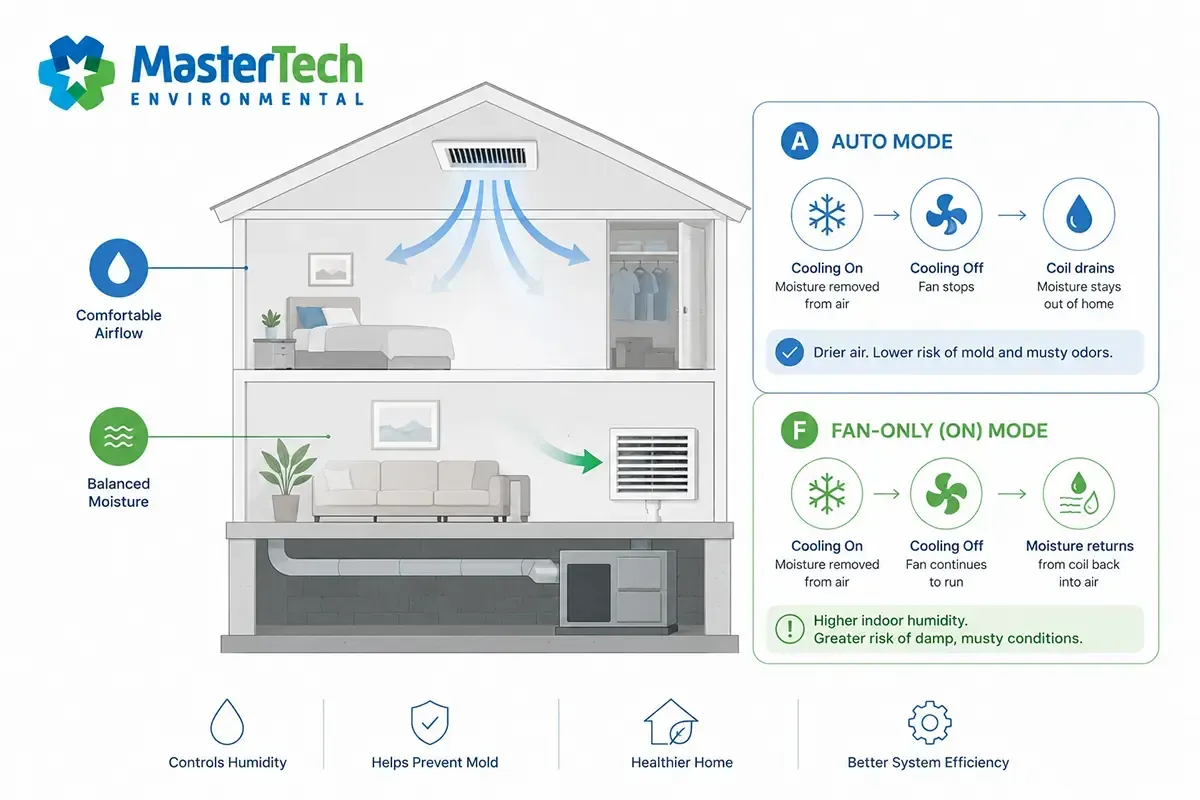
Fan “Auto” and fan “On” create different moisture behavior after the cooling cycle ends. With the fan set to “Auto,” the blower runs during active cooling and shuts off after the cooling call ends. With the fan set to “On,” the blower continues to move air after the compressor stops. That difference matters because the system is no longer removing moisture from the air in the same way.
What Happens After the Cooling Cycle Stops
During active cooling, humid indoor air passes across the cold evaporator coil. Moisture leaves the air, collects on that coil, and drains out of the system. That process helps the property feel drier, not only cooler. The concern arises when the cooling cycle ends, but the blower continues to move air across the damp coil.
The coil does not become dry the moment the compressor shuts off. Water remains on the coil and in the drain area after cooling ends. If the fan keeps running, air still moves across that wet surface. That air may pick up moisture that had already been pulled out of the indoor air.
Oak Ridge National Laboratory and Lawrence Berkeley National Laboratory studied this residential humidity behavior. They noted that blower operation allowed some moisture left on the cooling coil to re-evaporate into the airstream. A 2024 National Renewable Energy Laboratory report gives the same concern in direct HVAC control language, stating that continuous fan-only circulation increases indoor humidity by evaporating water from the wet coil back into the airstream. The issue is not the fan while the AC is actively cooling. The issue is what the fan does after active drying stops.
| Fan Setting |
What Happens |
Moisture Impact |
| Auto |
The blower runs during active cooling and shuts off after the cooling call ends. |
Moisture on the coil has more time to drain out of the system. |
| On |
The blower keeps running after active cooling stops. |
Air moves across a damp coil and may return moisture to the indoor air. |
The System Sounds Busy, but Drying Has Changed
This is why fan-only mode is easy to misunderstand. The vents still blow, so the property owner can hear and feel activity. That activity does not mean the system is still removing moisture. With fan-only mode, the system keeps circulating air after the strongest drying function has stopped.
That difference matters in North Jersey properties where the same HVAC system may serve rooms, levels, or office areas that do not dry evenly. A space near the thermostat may feel fine while another area stays damp or musty. The fan keeps moving air through the system, but the property may not be getting meaningful moisture removal between cooling cycles. That is the specific AC-related problem this setting creates.
Why Fan-Only Dampness Matters For Mold Risk
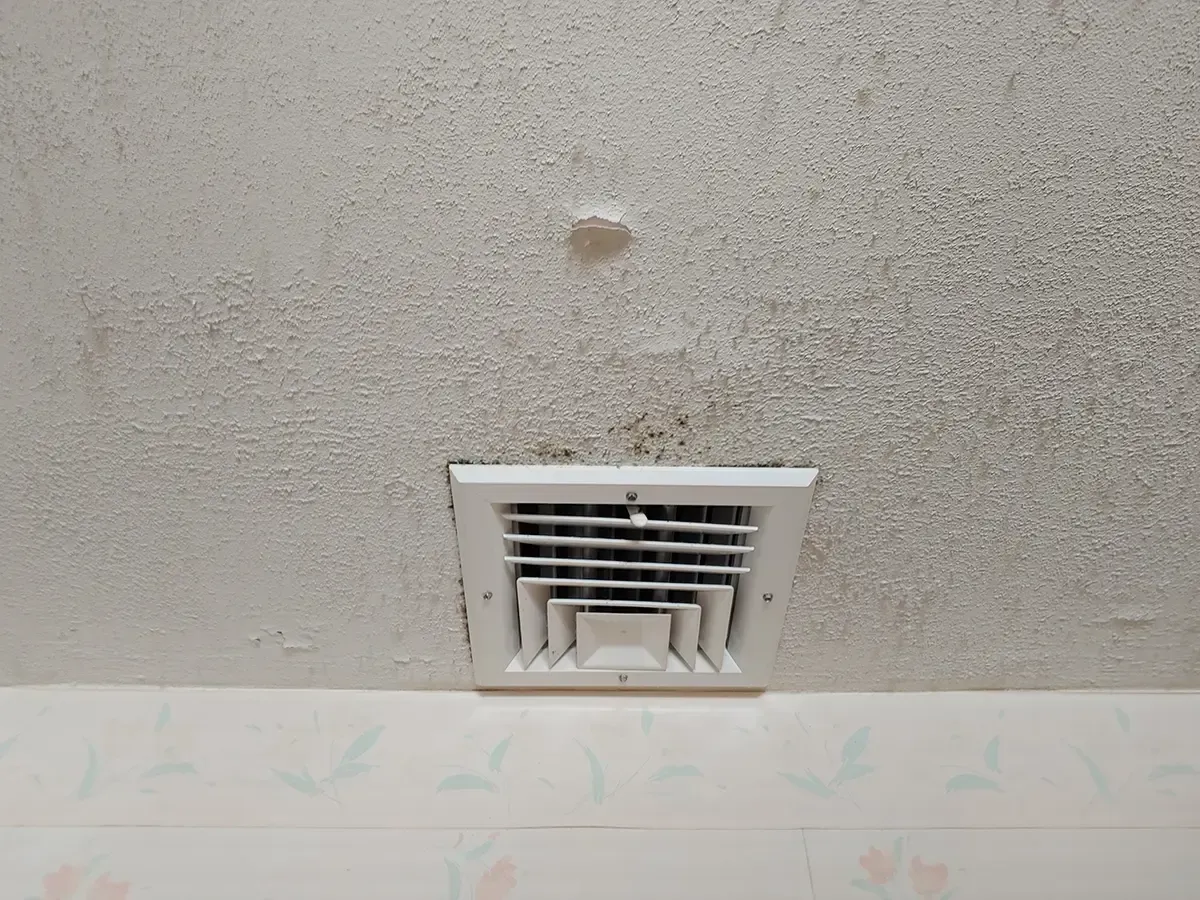
Mold risk is tied to moisture conditions, not the thermostat number. A property that reaches the set temperature can still have indoor humidity high enough to create mold-conducive conditions. Fan-only mode matters because it can impede moisture removal after the cooling cycle ends. That makes the setting relevant when damp air, musty odor, vent condensation, or visible staining appear while the fan runs for long periods.
EPA guidance keeps the mold connection focused on moisture control. EPA recommends keeping indoor relative humidity below 60 percent, with 30 to 50 percent as the preferred range when possible. That range matters because fan-only operation can make humidity harder to control if it keeps returning coil moisture to the air. A property does not need a large visible mold area for moisture behavior to deserve attention.
The signs tied to this issue should stay connected to the HVAC fan and dampness pattern:
- The air feels damp after the thermostat reaches the set temperature.
- A musty odor becomes stronger when the fan runs.
- Condensation appears near a supply register or grille.
- Staining develops around a vent edge.
- Indoor humidity stays elevated while the system sounds active.
These signs do not prove that fan-only mode is the only problem. They show that the fan setting belongs in the moisture conversation. When the AC fan runs constantly, the property owner may think the system is helping control humidity. The better question is whether the fan is moving air after the system has stopped drying it.
What to Correct First
The first correction is direct: set the HVAC fan to “Auto,” not “On.” That change matters because the blower should stop when the cooling cycle stops, giving moisture on the coil more time to drain instead of being pushed back into the property. Do not judge the change after one hour. Watch the same rooms, vents, and humidity conditions over several days of similar weather.
Use this chart to see whether the fan setting was part of the problem:
| What To Check |
What Improvement Looks Like |
What Continued Trouble Looks Like |
| Thermostat fan setting |
Fan is set to “Auto,” and airflow stops between cooling cycles. |
Fan stays on, or the property still feels damp even after the fan is set to “Auto.” |
| Indoor feel after cooling stops |
The air feels less damp after the AC cycle ends. |
The air still feels heavy or clammy after the thermostat reaches temperature. |
| Odor when the system runs |
Musty odor fades or becomes less noticeable after several days. |
Odor returns when the fan runs, especially near vents or closed rooms. |
| Supply registers |
Vent edges stay dry, with no new condensation or darkening. |
Condensation, staining, or damp dust collects around the grille. |
| Humidity reading, if available |
Indoor humidity moves closer to the 30% to 50% range and stays below 60%. |
Humidity stays above 60% or rises when the fan runs for long periods. |
If the dampness improves after switching to “Auto,” the fan setting was likely helping keep moisture active. If the same odor, condensation, or high humidity persists, the property still has a moisture issue that the fan setting did not resolve. That is when the issue needs a closer look, because the AC fan may have been masking the pattern rather than causing the whole problem.
The Fan Setting Is a Moisture-Control Issue
A North Jersey property can feel cool while the AC fan keeps moisture active after the cooling cycle ends. Fan-only mode matters because the blower can recirculate wet-coil moisture back into the airstream, making it more than a comfort choice. It becomes part of how the property handles moisture.
Set the fan to “Auto” so the blower runs only when active cooling is needed, not continuously. If damp air, musty odor, vent condensation, or humidity concerns continue after that change, the property needs a closer look at why the air is not drying. The point is not to blame the fan for every mold concern. It is to determine whether the fan is keeping moisture active when the AC should be helping remove it.